
A backyard pool is a major investment, yet for many owners it gets used for only a few months of the year. Once the weather cools, water temperatures drop fast and a pool that was once the centre of family life can sit untouched until the warmer months roll in.
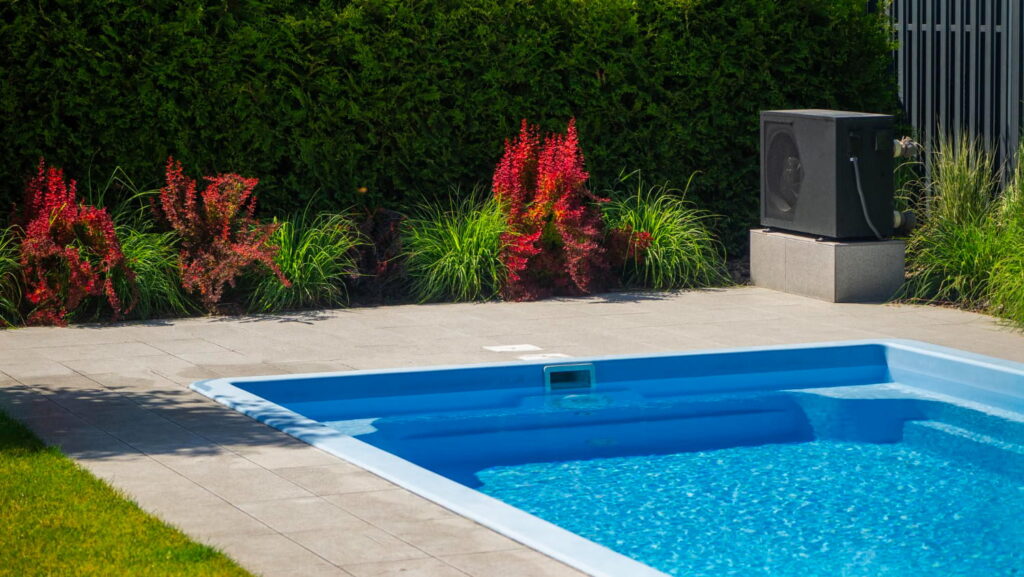
A pool heat pump is one of the most effective ways to change that, so rather than relying on the sun to do all the work, it keeps the water at a comfortable temperature regardless of the season, so the pool stays part of daily life rather than a summer only feature. We’re often asked whether the investment is worthwhile so here’s what to know before deciding.
How a Pool Heat Pump Actually Works
A pool heat pump doesn’t generate heat the way a gas heater does. Instead, it draws warmth from the surrounding air and transfers it into the pool water, using the same basic principle as a reverse-cycle air conditioner. Because the system moves existing heat rather than creating it from scratch, it can produce several times more heating energy than the electricity it consumes which is what makes heat pumps one of the more efficient heating options on the market.
They are also more consistent than solar heating as they keep working overnight and through cloudy stretches, holding the pool at a set temperature without much input from the owner once it’s dialled in.
Sizing It Correctly Matters More Than Most People Expect
Choosing the right size heat pump has a bigger impact on performance than almost any other decision in the process. A unit that’s too small will struggle to hold temperature in cooler months, and ine that’s oversized adds unnecessary cost without much extra benefit. The right size depends on a variety of factors including:
- Pool volume
- Average outdoor temperatures in your area
- Wind exposure
- Shade coverage
- How often, and how quickly, you want to heat the pool
Pools exposed to wind or heavy shade lose heat faster than pools in sheltered, sunny spots, so two pools of the same size can need different heat pump capacities. Getting this right from the outset means better efficiency, lower running costs and a system that performs the way it’s supposed to.
The Running Costs Are Usually Lower Than People Assume
Heating a pool is thought to be expensive to run, but instead they tend to be one of the more economical options available, simply because they use relatively little electricity to produce a large amount of warmth. The most efficient way to run one is to maintain a steady temperature rather than letting the pool cool down completely and reheating it, it’s this consistent operation that reduces the load on the system and keeps costs down.
For homes with rooftop solar, running the heat pump during daylight hours can offset some or all of its electricity use, lowering the ongoing cost even further. Weighed against months of an unused pool, most owners find the running cost easy to justify.
A Pool Cover Makes the Heat Pump’s Job Easier
A heat pump adds warmth and a pool cover keeps it there. Without one, a significant amount of heat escapes through evaporation, especially overnight when temperatures drop. An adequate cover for your pool reduces that heat loss and cuts down on evaporation, meaning the heat pump doesn’t have to work as hard to maintain the set temperature. It also keeps leaves and debris out of the water, which means less time spent cleaning and better water quality overall. This makes pairing a heat pump with a quality cover one of the most effective way to get strong heating performance without driving up running costs.
Get More Use Out of the Pool You Already Have
Once a heat pump is in place, the swimming season stops being dictated by the weather. Morning laps, weekend swims, and regular family use become possible well outside the handful of warm months most pools are limited to. As experienced pool builders, we factor heating and cover options into the broader design of a pool rather than treating them as an afterthought. If you’re deciding whether a heat pump is right for your setup, we can talk you through the options that suit your pool and how you use it.