
You’ve found the perfect house. The layout works, the location’s ideal and the backyard has serious potential. There’s just one thing missing… a pool!
The question isn’t whether you want to add one, that part’s easy. The real question is whether your property can accommodate it, and what you’ll need to navigate to make it happen. Adding a pool after purchase is entirely possible, but success depends on understanding your property’s limitations and requirements before you commit. Here’s what separates a straightforward pool installation from one that becomes complicated and expensive.
Checking the Space Available
Your backyard might look spacious, but pools require more room than most homeowners initially realise. Beyond the water itself, you’ll need area for concrete surrounds, landscaping and the safety fencing required by law. Then there’s the practical consideration of how you’ll actually use the space, for example will there be room for outdoor furniture, a BBQ area or garden beds, or will the pool consume every available metre?
Structural setbacks matter too. Pools placed too close to your home’s foundations or retaining walls can create long term issues with ground movement and water drainage. Local councils enforce minimum distances from property boundaries and permanent structures, which can limit where you’re able to position the pool. Getting these measurements right early prevents you from designing a pool that simply won’t fit within regulatory limits.
What’s Hiding Underground
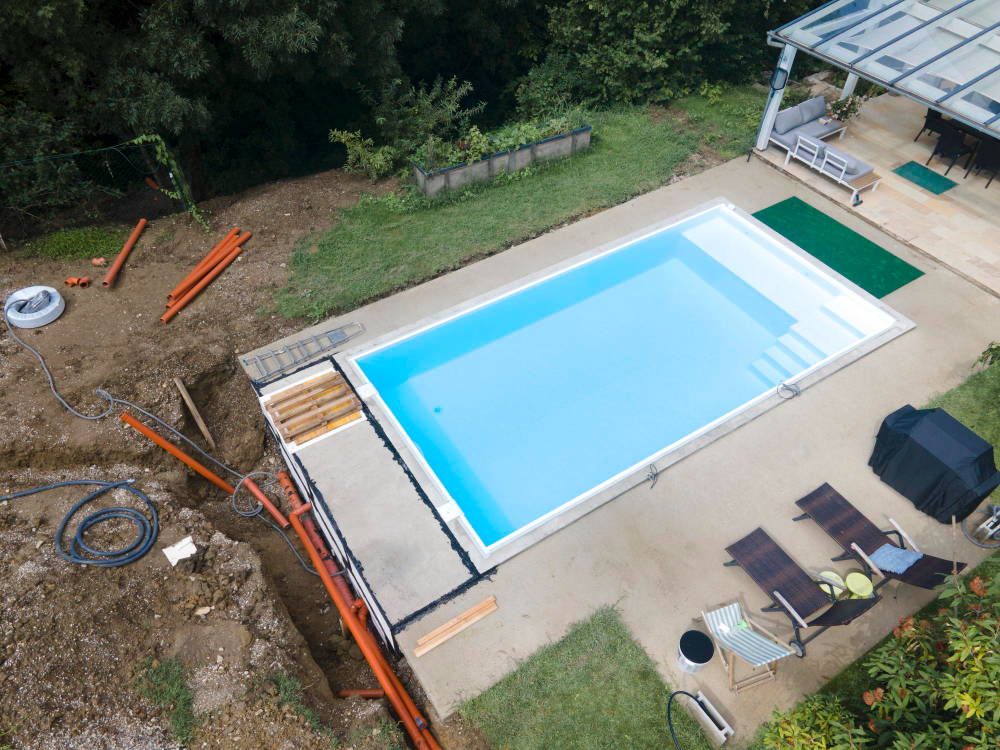
The surface of your yard only tells half the story. Underneath a network of water pipes, sewer lines, electrical cables and stormwater drains crisscross the property. Any one of these could sit directly where you’re planning to dig, and relocating essential services isn’t cheap. In some cases, certain infrastructure can’t be moved at all.
Before we can provide a quotation we will need to know exactly where underground services run across your property. Your original site plans can also reveal details about drainage, soil type and other factors that affect pool placement.
Fencing Requirements You Can’t Avoid
Pool fencing is mandatory across Australia, and the regulations are strict for a good reason. Before committing to an installation, think carefully about where your fencing will go and how it will integrate with the rest of your yard. It’s not just about compliance, as a well planned fence can enhance the look of your pool area and even complement your landscaping. However, if your pool is located too close to existing structures or boundaries, meeting these fencing requirements can be tricky. Planning this early avoids last minute adjustments that could change the pool’s layout or increase costs.
Getting Heavy Equipment In (and Out)
Pool construction demands excavators, bobcats and trucks to remove soil and prepare the site. That means your backyard needs to be accessible, ideally through wide side gates or driveways that allow machinery to maneuver easily. Properties with narrow access points, steep slopes or tight corners present genuine obstacles.
When standard access isn’t available, specialised equipment or alternative methods can sometimes work around the limitations. Smaller machines and crane assisted installations are all possibilities. They’re also significantly more expensive and time consuming. Assessing access early gives you realistic expectations about both feasibility and cost.
Crane Considerations for Fiberglass and Precast Pools
Fiberglass pools arrive as complete shells that need to be lifted into position. In many cases, that requires a crane, and the logistics can be straightforward if your property has clear overhead space and easy street access. When trees, power lines or neighbouring structures are in the way, the job becomes more complex.
Some installations require temporary road closures, council permits or coordination with utility providers to safely manage overhead lines. These aren’t insurmountable problems, but they do add time and cost to the project. If a crane will be necessary, factor it into your planning from the start rather than treating it as an afterthought.
Moving Forward with Confidence
When people think about the cost of a pool, they often focus on the pool itself. In reality, the full price tag includes much more such as fencing, landscaping, paving, lighting and even electrical work for pumps or heating systems. If access is tricky or crane use is required, those expenses need to be factored in too. Planning your budget with all these elements in mind will help you avoid unexpected bills and allow you to create a pool area that feels complete, rather than a half-finished project. Setting realistic expectations upfront makes for a smoother process and a better end result.
To simplify the process just get in touch as we guide homeowners through every stage of pool planning and installation, and our experience with local conditions, council requirements and site specific challenges means you’ll know exactly what your property can accommodate. And also what it will take to make your pool plans a reality.